
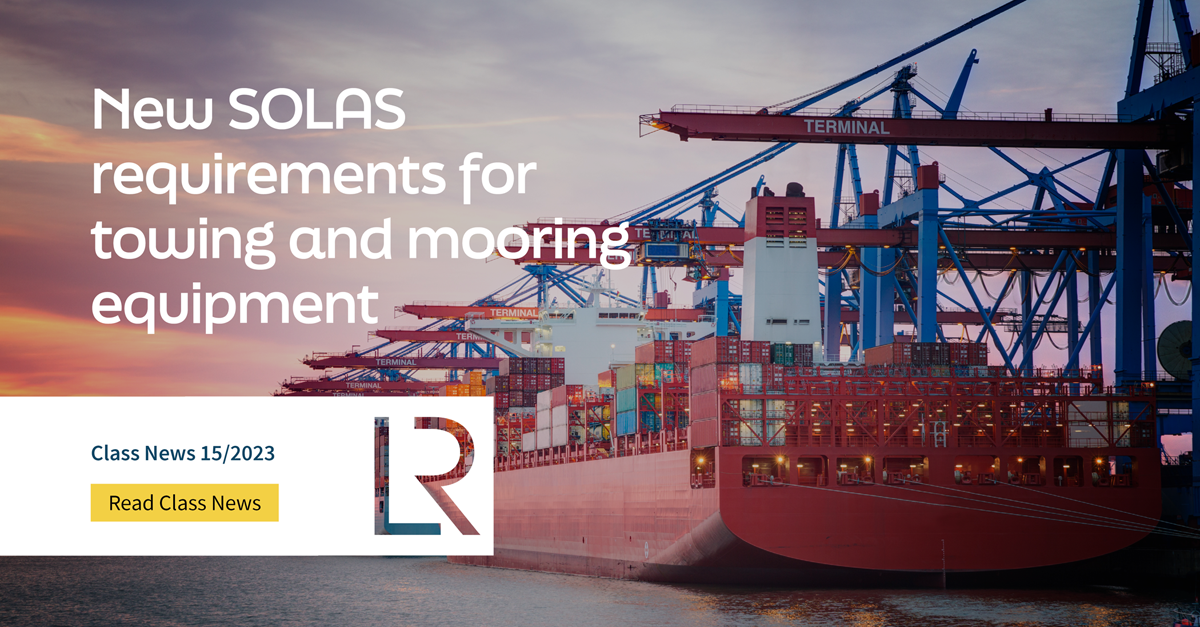
Summary
The **International Maritime Organization (IMO)** has amended **SOLAS Regulation II-1/3-8**, which will enter into force on **1 January 2024**. The new regulation will introduce stricter **inspection**, **maintenance**, and **procedural requirements** for all ships, with a focus on **towing and mooring equipment**. This move aims to enhance **maritime safety** and reduce the risk of accidents. The regulation will apply to all ships, regardless of size or type, and will require shipowners and operators to implement new **safety protocols**. For more information, see [[solas-regulation|SOLAS Regulation]] and [[maritime-safety|Maritime Safety]]. The new requirements will have a significant impact on the **shipping industry**, with many shipowners and operators needing to update their **towing and mooring equipment** to comply with the new regulation. The **International Maritime Organization (IMO)** has stated that the new regulation will help to reduce the number of accidents and incidents at sea, and will improve overall **maritime safety**. For more information on the IMO, see [[international-maritime-organization|International Maritime Organization]].
Key Takeaways
- The new SOLAS Regulation II-1/3-8 will enter into force on 1 January 2024
- The regulation will introduce stricter inspection, maintenance, and procedural requirements for all ships
- The regulation will have a significant impact on the shipping industry
- Shipowners and operators will need to implement new safety protocols to comply with the regulation
- The regulation will help to improve maritime safety and reduce the risk of accidents and incidents at sea
Balanced Perspective
The new **SOLAS Regulation II-1/3-8** is a necessary update to the existing regulation, and will help to ensure that all ships are equipped with safe and reliable **towing and mooring equipment**. The new regulation will require shipowners and operators to implement new **safety protocols**, which may require significant investment and resources. However, the benefits of the new regulation, including improved **maritime safety** and reduced risk of accidents, will outweigh the costs. For more information on the implementation of the new regulation, see [[solas-regulation-implementation|SOLAS Regulation Implementation]].
Optimistic View
The new **SOLAS Regulation II-1/3-8** is a significant step forward for **maritime safety**, and will help to reduce the risk of accidents and incidents at sea. The stricter **inspection**, **maintenance**, and **procedural requirements** will ensure that all ships are equipped with safe and reliable **towing and mooring equipment**. This will not only protect the lives of **sailors** and **passengers**, but also help to prevent **environmental disasters**. For more information on the benefits of the new regulation, see [[maritime-safety-benefits|Maritime Safety Benefits]].
Critical View
The new **SOLAS Regulation II-1/3-8** may be overly burdensome for some shipowners and operators, particularly smaller companies or those with limited resources. The stricter **inspection**, **maintenance**, and **procedural requirements** may require significant investment and resources, which could be difficult for some companies to afford. Additionally, the new regulation may lead to increased **bureaucracy** and **red tape**, which could hinder the efficiency of the **shipping industry**. For more information on the potential challenges of the new regulation, see [[solas-regulation-challenges|SOLAS Regulation Challenges]].
Source
Originally reported by Lloyd's Register